
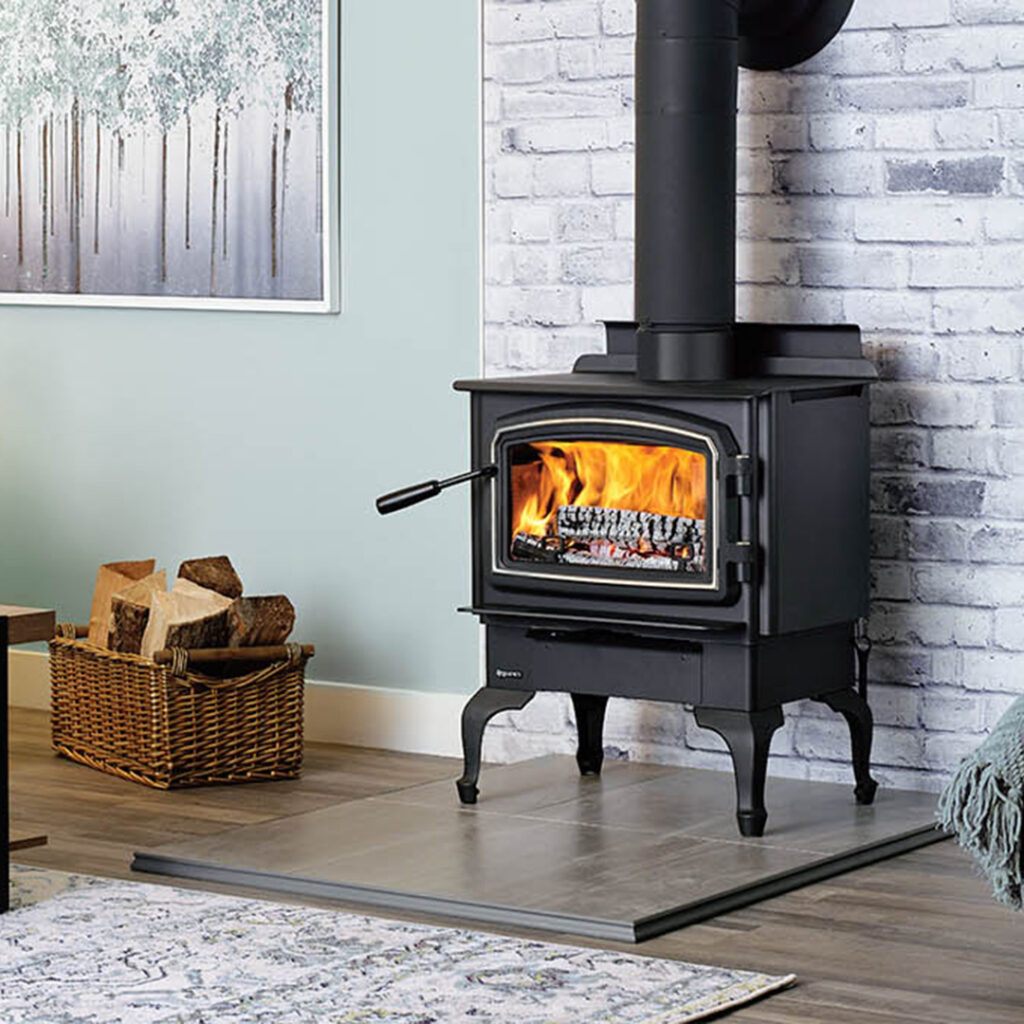
 A fireplace or stove can warm anything from one cozy room to a real share of your home’s heat. The number on the box won’t tell you which. After 35 years of helping families across Rhode Island and Massachusetts, we’ve learned that the heat you actually feel comes down to three things working together:
- The appliance: what it’s built to do, and whether it’s the right size.
- Your home: how tight it is and how the heat can move through it.
- Your fuel: especially the firewood, if you burn wood.
That’s why our honest answer to “how much heat will this give me?” always starts with a few questions about your house. Here’s what we tell customers on the showroom floor.
Why the BTU rating is only a starting point
A BTU rating tells you what an appliance can produce under test conditions, not what your living room will feel like. Many customers ask us whether the manufacturer’s number is accurate. The honest answer: it’s a useful comparison point, but it’s far from the whole story.
Here’s what’s behind those numbers:
- Wood and pellet stoves: EPA-certified models are lab-tested for emissions, and EPA’s database lists a tested heat-output range and efficiency for each one. Since May 2020, every certified model must show an overall efficiency. (EPA)
- Advertised vs. tested output: a brochure number is often higher than the EPA test figure, because the lab uses a smaller test load. One manufacturer says so plainly in its own FAQ. (Drolet)
- Gas fireplaces: the rating plate shows input BTUs, meaning the gas going in. How much of that reaches your room depends on the unit’s efficiency and your setup.
- “Heats up to 2,000 sq ft”: no agency standardizes square-footage claims. They’re the manufacturer’s best guess for an average house, and your house isn’t average.
So treat the BTU number like the horsepower on a car. It tells you something, but how the car drives depends on the road.
Your home matters as much as the appliance
The same fireplace can feel like a furnace in one house and barely noticeable in the next. Two things make the difference.
How tight is the house? A well-insulated home with good windows holds onto heat. A drafty old farmhouse lets it slip away almost as fast as you make it.
Can the heat move? An open floor plan lets warm air travel freely. A home that’s cut up into small rooms and hallways traps heat in the room with the fireplace, especially with a gas unit.
A story from Dartmouth
A customer in Dartmouth, Massachusetts bought a gas insert expecting it to heat his whole home. His house was an older single-story ranch, chopped up into separate rooms, and the heat simply couldn’t reach the bedrooms. He was disappointed, and understandably so.
The fix was simple. He didn’t have central air, so a few small fans placed in hallways and doorways pushed the warm air where it needed to go. His bedrooms finally warmed up.
Our tip for cut-up homes
If your home has central heating or air conditioning, set the system’s fan to “On” (fan only) while the fireplace runs. The blower pulls warm air from the fireplace room and spreads it through the ductwork. No ducts? Small fans in doorways and hallways do the same job on a smaller scale.
With wood, the fuel decides the heat
The most common reason a wood stove disappoints is wet wood. Most firewood sold as “seasoned” isn’t.
We know this firsthand. We buy plenty of firewood to burn in our own showrooms, and even buying in volume, we can’t get truly seasoned wood from our suppliers. If a hearth dealer can’t, a homeowner buying a cord off a truck usually can’t either.
The fix: buy your wood early, split it, and stack it outside off the ground for a year or more before you burn it.
How to tell if your wood is ready
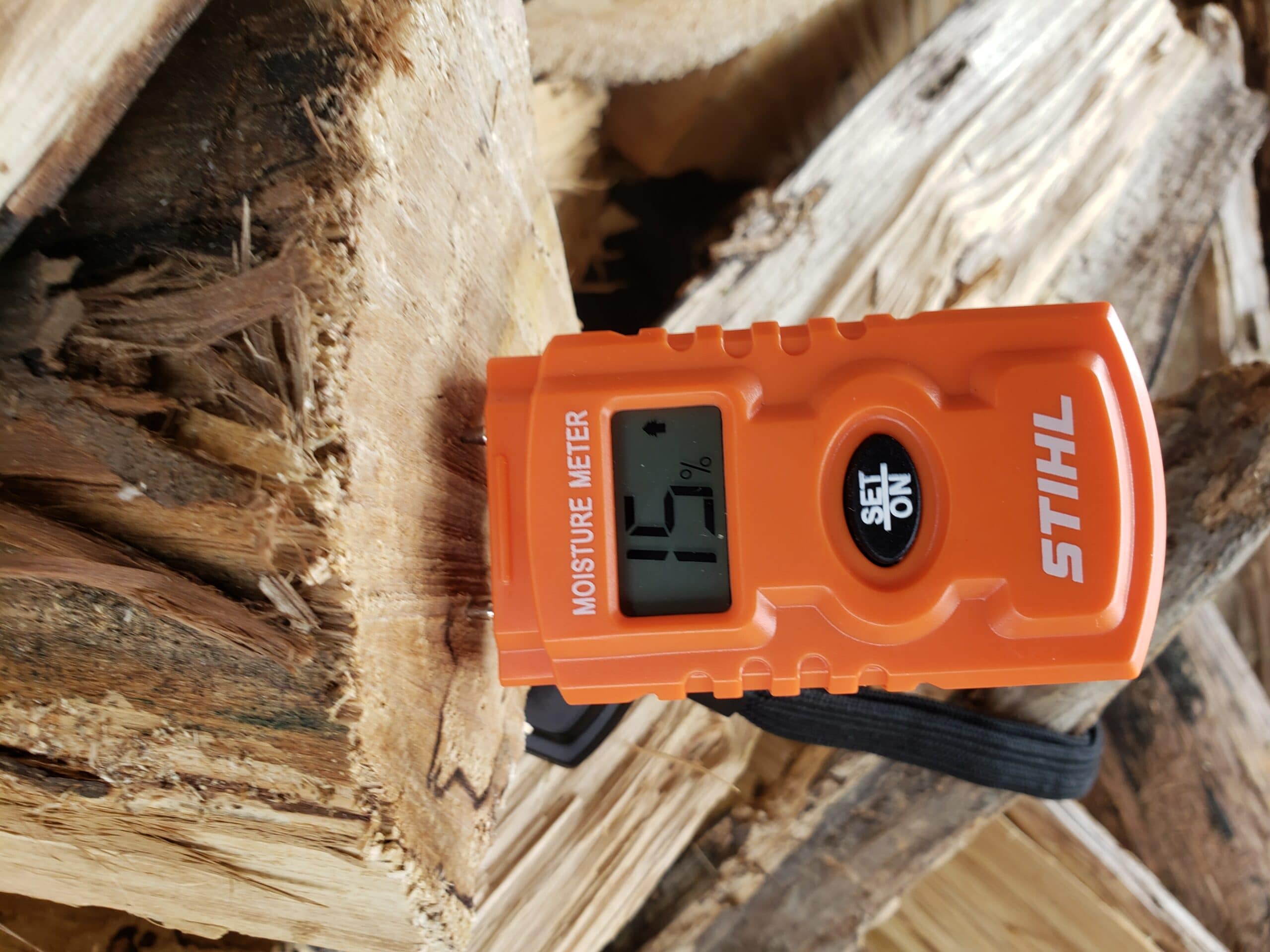
A moisture meter is the best $25 a wood burner can spend. Use the kind with two metal prongs:
- Split a log and push the prongs into the freshly split face. The ends dry first, so testing the end can fool you.
- Look for a reading under 17%. That’s our Hearthside standard, a little stricter than the EPA’s guideline of 20% or less. (EPA)
What wet wood does to your stove
Wet wood burns cold. Its energy goes into boiling off water instead of heating your home. You’ll notice:
- The stove is hard to light and hard to keep going.
- The glass turns black with soot.
- Smoke pours out every time you open the door.
- Creosote builds up in the chimney, which raises the risk of a chimney fire.
A story from Little Compton
A customer in Little Compton replaced her old Vermont Castings Encore with a new Vermont Castings Intrepid. The Encore came from an era when stoves were looser and more forgiving. The Intrepid is smaller and built to today’s cleaner-burning EPA standards, which makes it more sensitive to draft and wood quality.
She struggled with it. Her wood wasn’t fully seasoned, and a recent renovation had added insulation, making the house tighter and changing how the chimney drafted.
Our team visited her home with properly seasoned wood. We showed her how to crack a window during startup so the stove could heat up and start drafting. She bought a cord of kiln-dried wood to burn that first winter while her own stack finished seasoning, and the stove has performed well since.
If you’re upgrading from an older stove, expect a learning curve. Today’s stoves burn cleaner and use less wood, but they ask more of your firewood. Kiln-dried wood is a smart bridge for the first year.
Match the appliance to what you want from it
There’s no single best fireplace, only the right one for how you live. Here’s how we guide families:
| If you want… | We usually recommend | Why |
|---|---|---|
| Ease of use | Gas fireplace or insert | Flip a switch or use the remote. No wood to haul, no ashes. |
| Ambiance | Wood stove or insert | Nothing replaces the crackle, smell and glow of a real wood fire. |
| To offset oil or electric heat, even while you’re at work | Pellet stove or insert | A built-in thermostat holds the room temperature on its own. |
Wood vs. pellet for saving money. Both are fine supplemental heat for homes that heat with oil or electric. In our experience, families typically save 30–40% on heating costs, and more when oil prices are high.
The key difference is control. A pellet stove’s digital thermostat keeps the room at the temperature you set. A wood stove depends on you to adjust the air and add wood, so room temperature is harder to regulate. That’s the trade-off for a real wood fire.
Bigger isn’t better: sizing is personal
Square footage alone can’t size a stove. A tightly insulated house might need a small stove, while a drafty house of the same size needs a larger one.
An oversized wood stove makes things worse, not better. You end up turning it down to keep the room comfortable, and a choked-down fire burns dirty and builds creosote. That’s why our team asks about your insulation, windows, layout and how you plan to use the stove before recommending a size.
Frequently asked questions
Is the manufacturer’s BTU rating accurate? It’s a fair comparison point between models, but it’s measured in a lab, not your living room. Advertised numbers often run higher than EPA test figures. Square-footage claims aren’t standardized by anyone.
Can a fireplace heat my whole house? Sometimes, in a tight home with an open layout. In a home with many small rooms, expect it to heat the main living area well, and use your HVAC fan or small fans to move heat further.
How dry should firewood be? Under 17% moisture by our standard (the EPA says 20% or less). Test a freshly split face with a two-prong moisture meter.
How long does firewood need to season? A year or more, split and stacked outside off the ground. Don’t count on wood sold as “seasoned” being ready to burn.
What size stove do I need? It depends on your insulation, windows and layout as much as square footage. Two houses of the same size can need very different stoves.
Let’s find the right fit for your home
The heat a fireplace provides depends on the appliance, your home and your fuel. Getting all three right is why we have showrooms staffed by knowledgeable people who ask about your house before they talk about products.
Bring a few photos of the room and a rough idea of your layout, and we’ll help you find the right solution. Visit us or give us a call:
- Warwick, RI: (844) 401-2876
- Holliston, MA: (844) 508-2876
- Westport, MA: (844) 774-2876
Hearthside Fireplace & Patio: Bringing Families Together™


